

Rich Dad Poor Dad: 10 Key Lessons That Still Matter in 2026

Updated: Sep 2
Rich Dad Poor Dad remains one of the most influential—and most debated—personal finance books ever published. Its strongest value is not a stock-picking formula; it is the way it challenges readers to think about cash flow, financial literacy, ownership, and the difference between earning income and building assets.
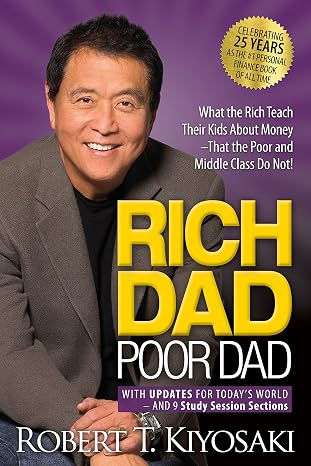
Its appeal comes from making financial independence feel concrete. Through the contrast between two approaches to work, ownership, risk, and education, Robert Kiyosaki gives beginners a memorable vocabulary for asking where their money goes and what they own that can support future choices.
To check the available edition of Rich Dad Poor Dad on Amazon and see the current price, click the button below:
The book’s greatest strength is its ability to turn abstract ideas—cash flow, assets, ownership, and financial literacy—into questions readers can apply immediately to their paycheck, expenses, and long-term plans.
Quick Verdict: Is Rich Dad Poor Dad Still Worth Reading?
Yes, with the right expectations. It is accessible, memorable, and useful for readers who have never thought seriously about assets, cash flow, entrepreneurship, or financial education. It is much less useful as a technical investing manual, because many concepts are intentionally simplified and some of the author’s framing differs from formal accounting and finance.
Which Edition Should U.S. Readers Buy?
The English 25th Anniversary Edition was published by Plata Publishing on April 5, 2022. The U.S. paperback listing identifies ISBN-13 978-1612681122 and 336 pages; formats and printings can differ, so readers should compare the listing with the edition they intend to buy.
For most first-time readers, the 25th Anniversary Edition is the most straightforward choice because it keeps the original framework while adding context for a newer generation.
About Robert T. Kiyosaki
Robert T. Kiyosaki is an American author, entrepreneur, and the founder of the Rich Dad financial-education brand. His work centers on financial literacy, entrepreneurship, real estate, and the distinction he draws between earned income and ownership. That practical, provocative background explains both the book’s accessibility and the need to compare its simplified teaching models with formal accounting, tax, and investment sources.
Who Will Get the Most Value From This Book?
Rich Dad Poor Dad is especially useful for beginners who earn income but have not yet built a framework for saving, investing, owning productive assets, or evaluating how recurring expenses affect long-term wealth.
Experienced investors may find the ideas familiar, but the book can still be useful as a reminder that behavior, incentives, cash flow, and financial education often matter as much as knowing investment terminology.
10 Key Lessons From Rich Dad Poor Dad
The ten ideas below show where the book remains persuasive, where its simplified language needs context, and how a beginner can translate its mindset into safer, more concrete financial habits.
1. Financial literacy changes the way you see money
A recurring message is that earning a good salary does not automatically create wealth. Understanding cash flow, debt, taxes, assets, liabilities, and investment risk gives you a better basis for making decisions.
2. Build assets instead of relying only on earned income
Kiyosaki encourages readers to acquire assets that can produce cash flow or appreciate over time. The practical takeaway is not that every asset must pay you monthly, but that long-term wealth usually requires owning productive resources rather than consuming every dollar earned.
3. Separate lifestyle choices from wealth-building choices
A large paycheck can disappear into housing, vehicles, subscriptions, and debt service. The book pushes readers to ask whether a purchase strengthens or weakens future cash flow before treating it as a sign of financial success.
To buy Rich Dad Poor Dad on Amazon at a competitive price and have it delivered to your home, click the button below:
This is a useful point to continue reading with the book’s central test in mind: income can improve your lifestyle, but ownership and disciplined cash flow are what expand your future options.
4. “Mind your own business” means build something you own
This idea is broader than starting a company. It can include a diversified investment portfolio, a side business, intellectual property, or other assets that belong to you rather than depending entirely on one employer.
5. Learn before taking tax or entity strategies literally
The book discusses corporations and taxes as tools wealthy people understand. The useful lesson is to learn the rules. The unsafe interpretation is to assume a corporation automatically cuts taxes or protects assets. U.S. tax and legal outcomes depend on structure, activity, state law, and individual circumstances.
6. Opportunities often require knowledge before capital
Financial education can help investors recognize opportunities that others overlook. But opportunity should never be confused with certainty: due diligence, valuation, liquidity, and downside risk still matter.
7. Work to learn, not only to earn
Kiyosaki argues that sales, communication, accounting, investing, and management skills can compound over a career. A job can therefore be evaluated partly by the skills and optionality it creates, not only by the next paycheck.
8. Fear and overconfidence can both damage returns
Fear can keep people permanently out of markets, while overconfidence can push them into leverage, concentration, or speculation. A stronger approach is to use a plan, diversification, position sizing, and an emergency fund.
9. Start building systems instead of waiting for perfect conditions
The book favors action. A more disciplined version of that lesson is to automate saving, contribute consistently to tax-advantaged accounts when appropriate, and create rules that reduce emotional decisions.
10. Teach money skills early
One of the book’s enduring strengths is its argument that financial education should begin before adulthood. Budgeting, compound growth, taxes, credit, investing, and entrepreneurship are easier to use when learned before major financial obligations arrive.

What Has Aged Well—and What Needs More Skepticism
What aged well: the emphasis on financial literacy, ownership, cash flow awareness, entrepreneurship, continuous learning, and building assets over time. These ideas remain relevant regardless of whether someone prefers index funds, real estate, a business, or a combination of strategies.
What needs caution: the book’s definition of assets and liabilities is a cash-flow teaching device, not the same as formal accounting terminology. A primary residence, for example, is still an asset on a balance sheet even if it creates ongoing expenses. Likewise, leverage can magnify losses as easily as gains.
Readers should also treat tax, corporate-structure, and real-estate examples as prompts for further research rather than instructions to copy. In the United States, tax and legal strategies should be checked with qualified professionals.
Is Rich Dad Poor Dad a Good Investing Book?
It is better described as a financial-mindset book than a complete investing book. It does not replace a diversified portfolio framework, valuation analysis, retirement planning, or evidence-based asset allocation. Its role is earlier in the journey: it encourages the reader to care about those subjects in the first place.
Is Rich Dad Poor Dad Worth It in 2026?
For beginners, yes. The book is still an effective gateway into financial education when read critically. Its best lessons can motivate better saving, learning, and ownership habits; its more sweeping claims should be tested against accounting, tax, and investment evidence before being applied.
Browse more investment book reviews in our Books hub.
Frequently Asked Questions (FAQ)
These answers address the questions that matter most before buying: the book’s audience, its treatment of assets and homes, the limits of its tax examples, and which English edition is easiest to find.
Is Rich Dad Poor Dad based on two real fathers?
Kiyosaki presents the book through the contrast between his biological father and the father of his best friend, whom he calls “Rich Dad.” Readers should treat the narrative as the author’s teaching framework rather than as independently verified financial research.
Is Rich Dad Poor Dad good for beginners?
Yes. Its accessible language and memorable examples make it easy to enter topics such as cash flow, assets, financial education, and entrepreneurship. Beginners should follow it with more technical sources on investing, taxes, and accounting.
Does the book teach you which stocks to buy?
No. It does not provide a modern stock-selection or asset-allocation system. It focuses much more on financial mindset, ownership, entrepreneurship, and cash flow.
Is a house really a liability?
In formal accounting, a home is an asset and a mortgage is a liability. Kiyosaki uses a simplified cash-flow framework to emphasize that an expensive home can consume cash instead of producing it. The distinction is useful conceptually but should not be confused with accounting definitions.
Should readers copy the book’s tax and corporation strategies?
Not without professional advice. U.S. tax treatment and liability protection depend on facts, entity structure, state law, and current tax rules. A CPA, enrolled agent, or attorney may be appropriate depending on the issue.
Which edition is best in 2026?
For a new English-language reader, the 25th Anniversary Edition from Plata Publishing is a practical choice because it includes the original framework plus updated milestone and study material.
Read Next
For a more evidence-oriented look at how behavior affects financial outcomes, read The Psychology of Money: 10 Lessons from Morgan Housel.
Paulo Vasconcelos — Sago Investimentos
DISCLAIMER: This article is educational and is not individualized investment, tax, accounting, or legal advice. Some anecdotes in the book reflect the author’s own framing and should not be treated as independently verified financial evidence. Some links may be affiliate links and may generate a commission at no additional cost to the reader. Prices, editions and availability can change; verify the exact product before purchasing.

_edited_edited_ed.jpg)
Comments